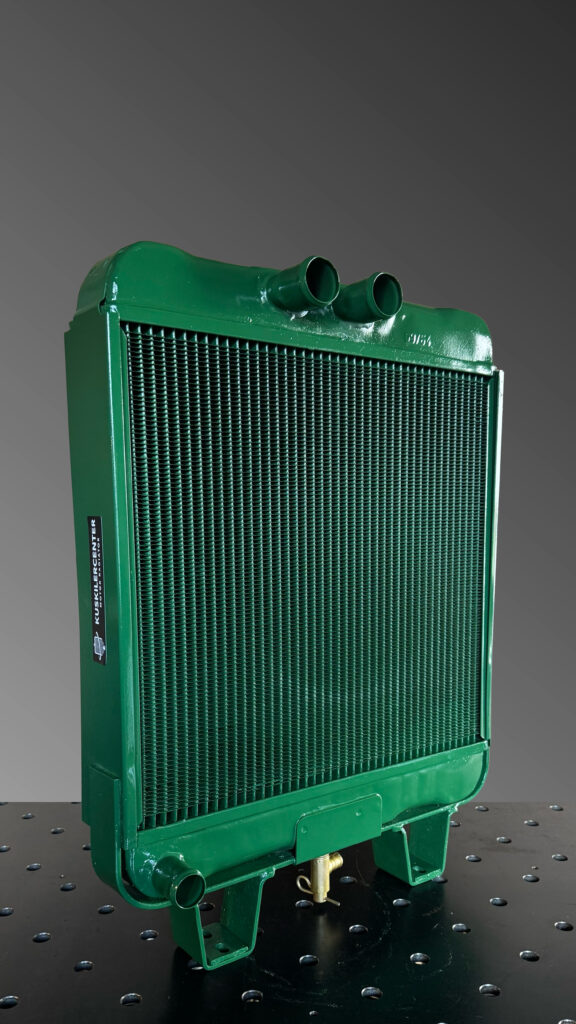
Restoring the radiator of a 1964 John Deere tractor
Some pieces arrive at the workshop quietly. This one came with 1964 stamped on the tank and a story you could read from across the room.
John Deere, 1964. A water radiator. There are still a few tractors from that year around, far fewer that still work. And almost none preserved the way this one was.
With a piece like this, the question is not whether it can be repaired. The question is how much of it can stay original.
Why repairing this radiator was no longer an option
When you put it on the bench, the first thing you see is not the core. The first thing you see are the traces of hands that tried to save it before you. Solder here, a patch there, something elsewhere that held once and then stopped holding.
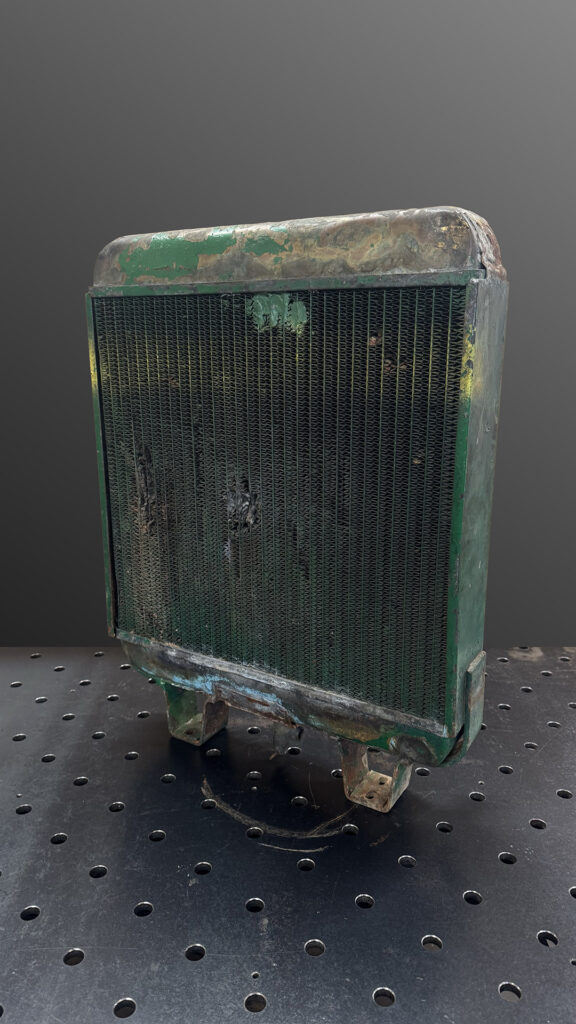
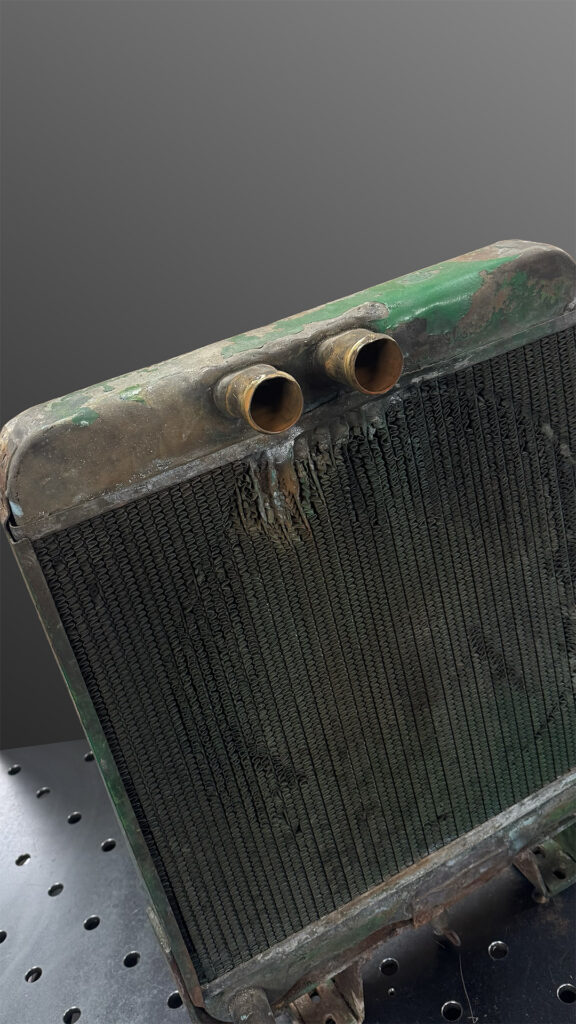
Patching made sense for as long as it did. At some point it stops making sense. The material does not give way in one spot, it gives way everywhere at once, it just does not show it all at once. You patch here, a week later it leaks there. And so on, until someone says enough.
It is a difference I explain on the phone almost every week. When a radiator leaks after an impact, a repair makes sense. When it starts leaking on its own, the material has worn out from the inside, and every patch only postpones the same conversation by a few weeks. When each route pays off is explained on our services page.
This radiator was right at that point. Repairing it was no longer a question of skill, it was a sum that did not add up.
What dismantling and recoring revealed
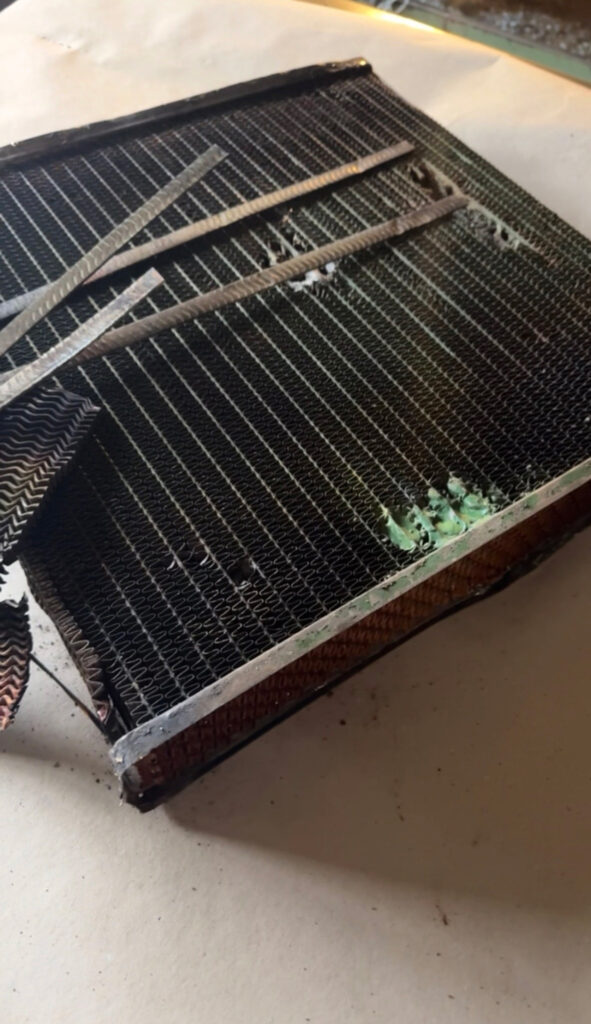
The core had literally fallen apart. I expected that. What surprised me was everything else.
Original tanks and side panels after sixty years
The top tank was in a condition you do not expect on a sixty year old part. Not fairly good, but excellent. The bottom one was a little worse, and at first I counted on having to make a new one.
After sandblasting it turned out that was not necessary. Under the dirt, old paint and layers of repairs was material with plenty of life left in it. This happens with old parts more often than you would think. What looks like scrap is sometimes just dirty.
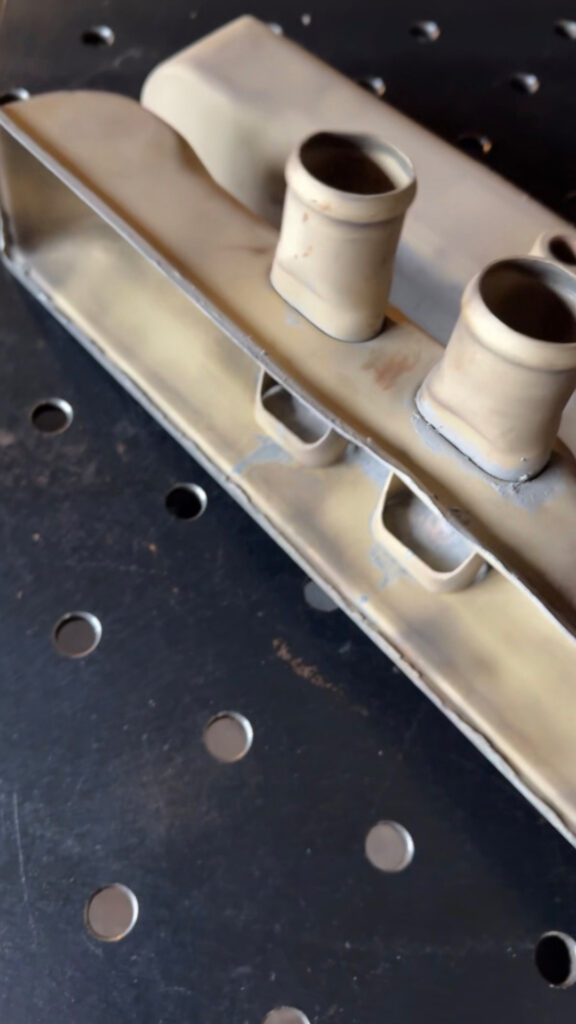
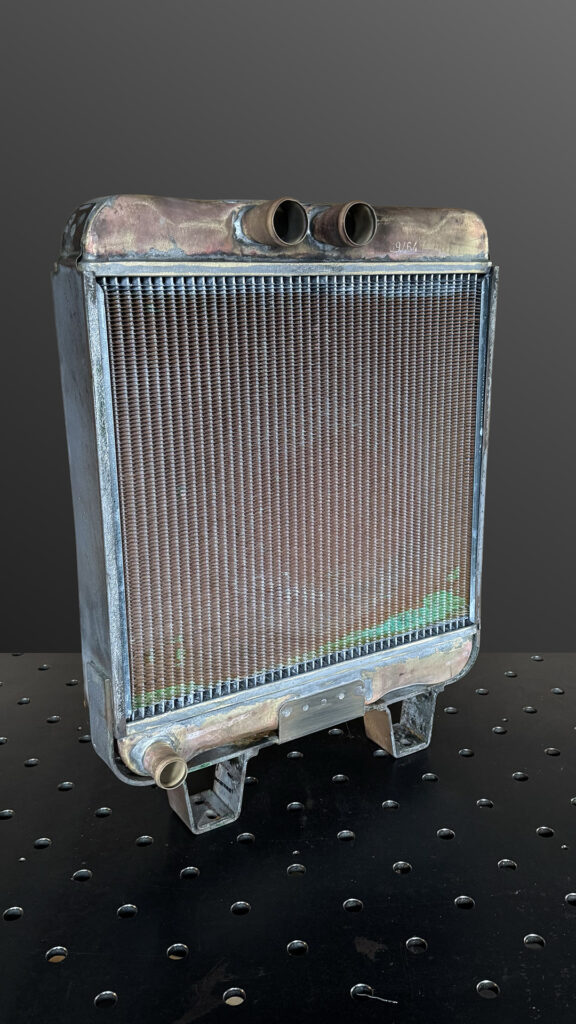
The side panels were excellent too.
The mounting bracket that had to be made new
Only one part stood out, the centre mounting bracket. It was worn to the point where there was nothing left to save. Why this one failed when everything around it held, is hard to say. That is how it goes with old machines. Some things wear out logically, some in their own way.
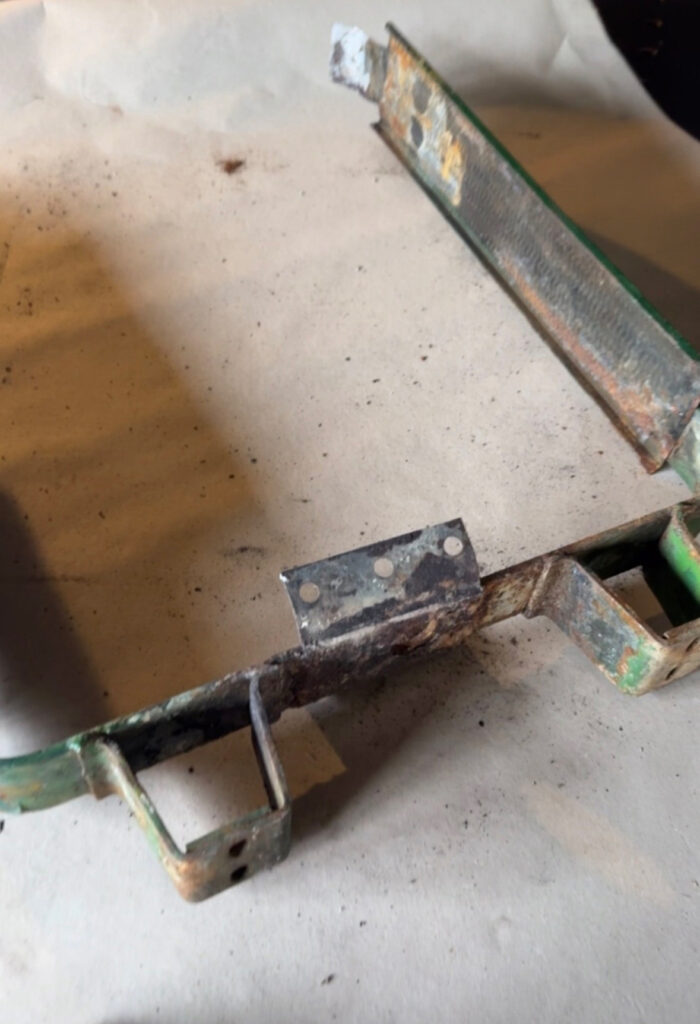
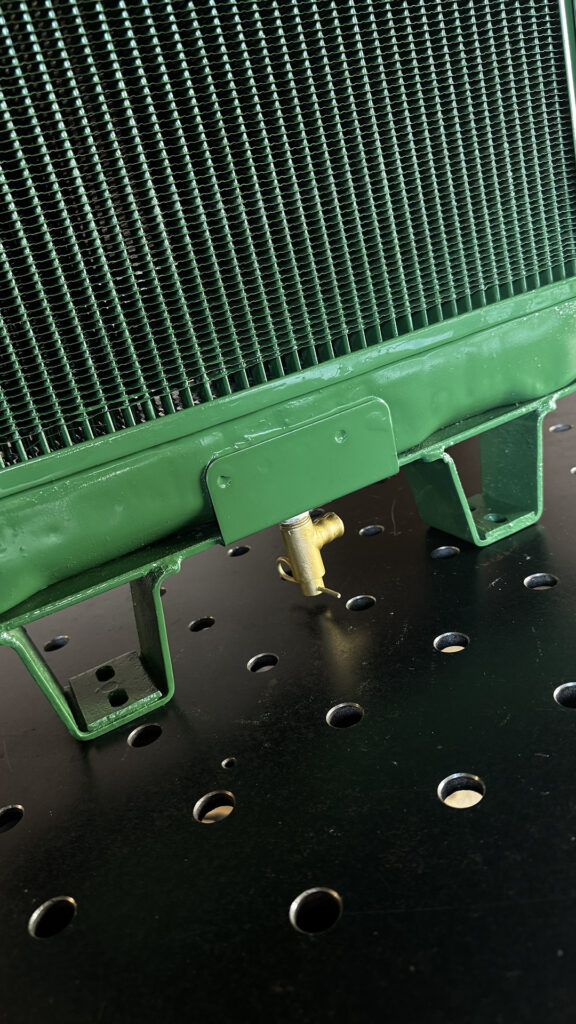
I made the new one to the original, with the same dimensions and the same mounting. Once painted, you cannot tell it from the rest.
Restoration to original: what stays and what is new
With a classic the rule is simple. What is original and sound, stays. What is not, is made new, exactly as it was.
The top tank with the year stays. The bottom tank stays, sandblasted and polished. The side panels stay. The bracket is new, because there was no other way.
New core, new fins. Assembly, pressure test, polishing to the end. The pressure test is the step the customer never sees, and at the same time the only one that tells you whether the job is really done. A radiator that fails the test does not get painted.
Only then comes the paint.
John Deere green, finding the right mix
John Deere green is a story of its own. You will not find the right mix on the shelf, and every shade you do find is slightly off. Some time went into searching, some into comparing.
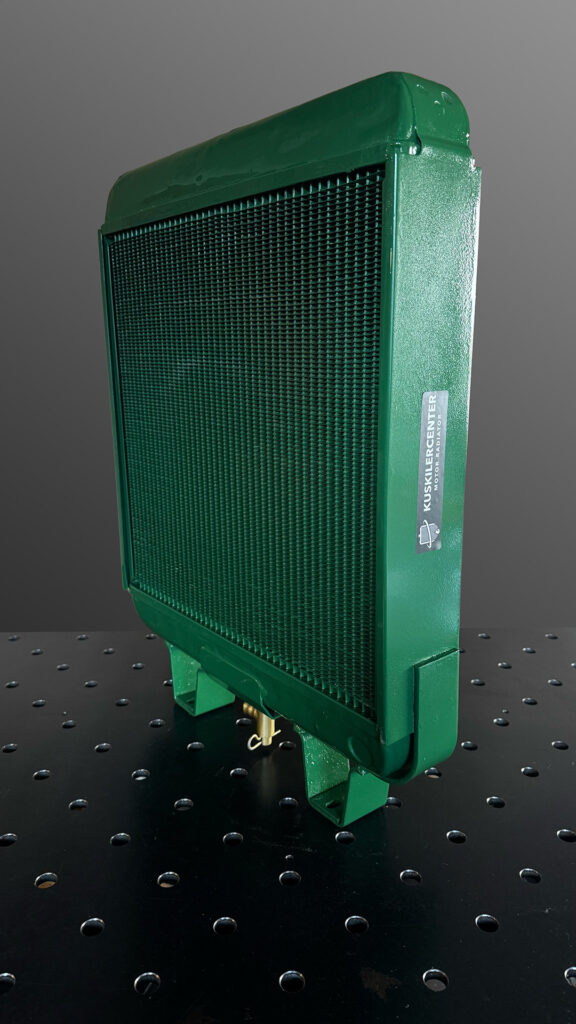
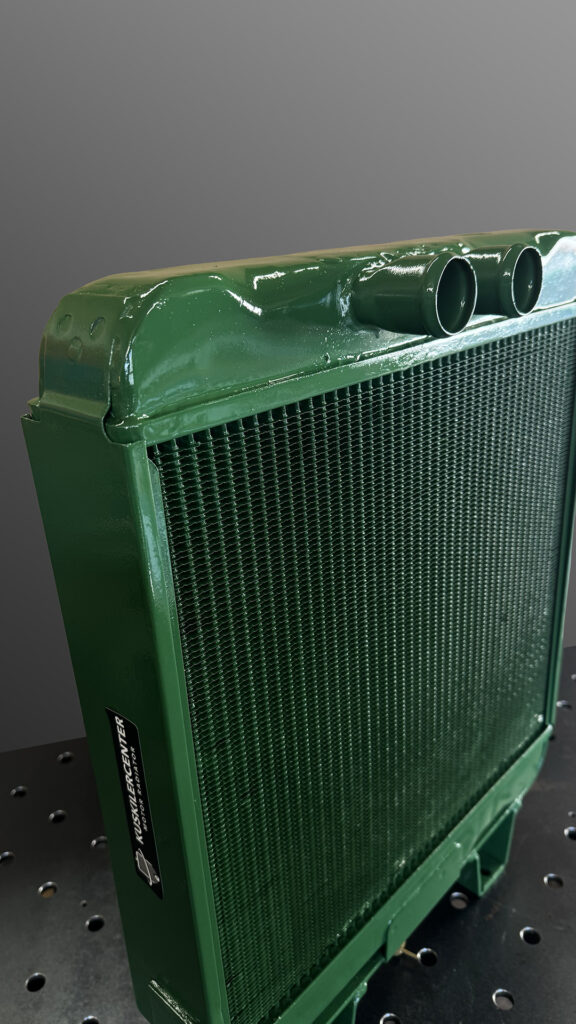
In the end we got close enough that nobody will pick at it on a 1964 tractor. A black decal to finish, the year clearly visible, and the piece is back where it was sixty years ago.
Radiator repair or restoration: which is worth it
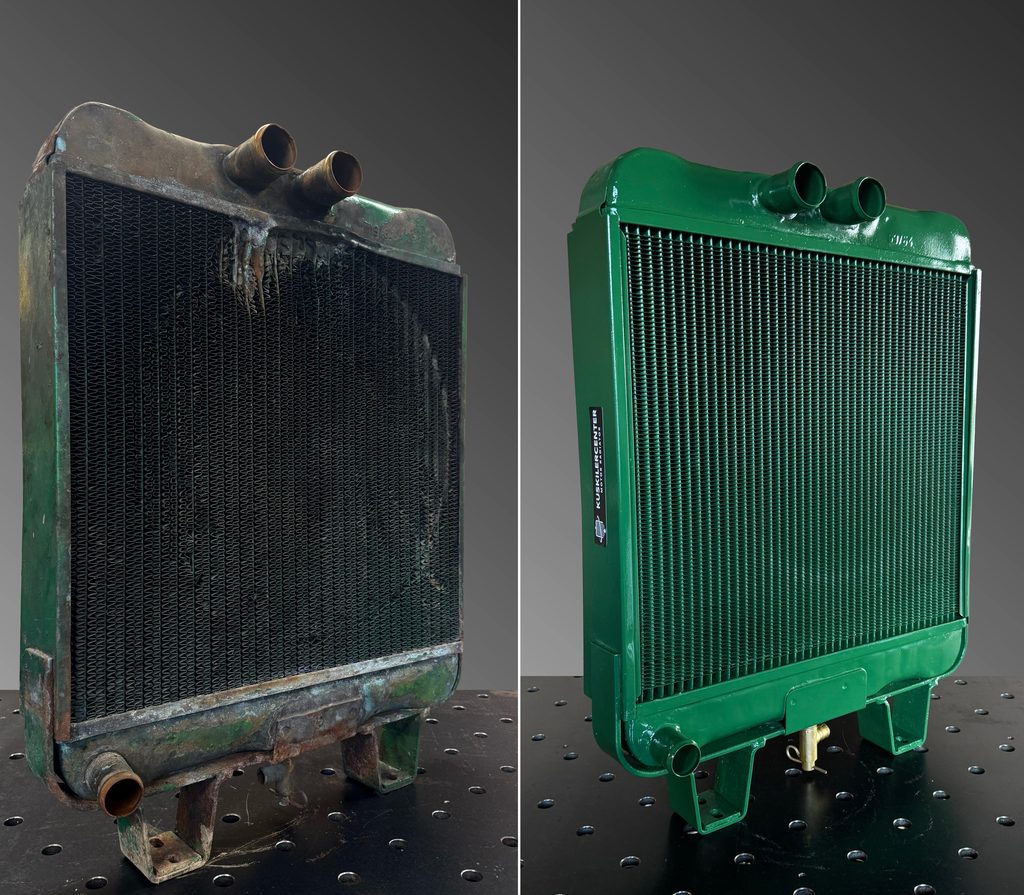
A radiator that has been cooling since 1964 will keep cooling. With its original tanks, original side panels, a new core and one bracket that had to be made new.
That is the difference between a repair and a restoration. A repair buys time. A restoration gives it back.
If you have a similar piece and are not sure which way to go, send us a photo and dimensions. A photo tells us a lot, dimensions tell us almost everything. We ship across Europe.
Behind every cooler, a craftsman.